Over the past three decades, the server and data center market has experienced rapid growth, driven by the increasing demand for AI technologies and the advancement of GPUs and CPUs. This growth has ushered in some of the world’s most powerful computers, which have been accompanied by a heap of challenges in terms of maintenance costs, sustainability, and operational efficiency.
Navigating through this time of growth, it has become evident that addressing sustainability concerns is vital, without causing disruptions to the overall operation of data centers. Traditional cooling technologies have continued to struggle to keep pace with the continued advancements in CPUs and GPUs, posing a central challenge: how to effectively cool the influx of new powerful AI server technology while simultaneously preserving the cost-effectiveness and efficiency of data centers.
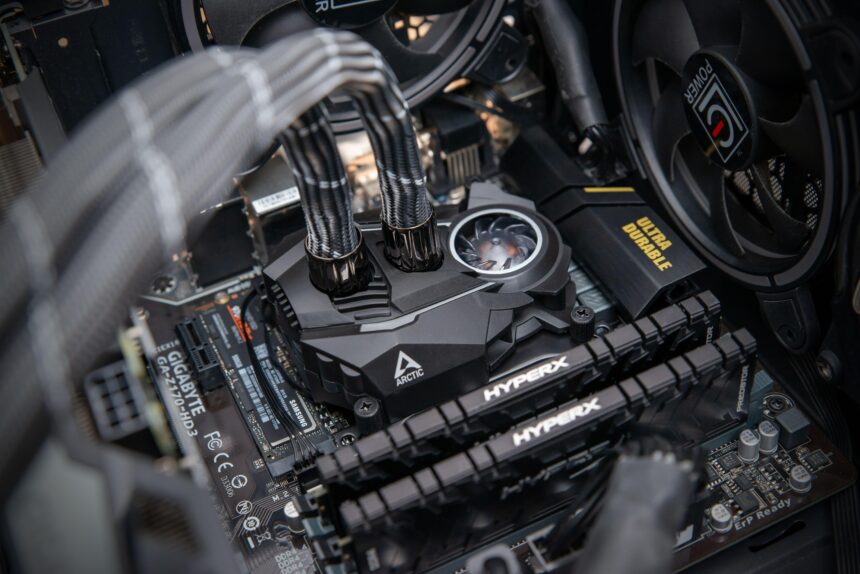
The latest high-performance liquid cooling infrastructure is poised to tackle this challenge head-on. Innovative solutions have been carefully engineered and tested to support high-density and high Thermal Design Power (TDP) CPUs and GPUs. These solutions have undergone comprehensive validation and testing procedures across various levels, encompassing system, rack, and cluster evaluations. This process ensures a level of consistency and reliability essential for sustaining the growth of the data center industry.
The concerted efforts within the industry to embrace liquid cooling signify an upward trajectory for the data center industry. A Dell’Oro Group study projected that “liquid cooling will grow from just 5% of the data center thermal management market to 19 percent by 2026.” This transition not only allows it to keep pace with advancing technology but also addresses several rising concerns within data centers, marking a big step toward a more sustainable and efficient future for data centers.
It is as simple as this: To support the operational efficiency of operating and maintaining a data center, industry leaders will need to start to rely on the new liquid cooling solutions in 2024.
Maintaining Costs
While the growth of the data center industry has reflected the hunger for progress, the expenses needed to successfully operate a data center have also increased significantly. The abrupt rise in power needed to sustain computation for AI applications and large language models is a major factor. The financial costs of operating a modern data center are continually rising thanks to mass energy consumption, the price of electricity, infrastructure upgrades, hardware maintenance, and other facility costs.
The increasing requirements for liquid cooling have helped expand the offerings, potentially making liquid cooling less expensive and more readily available than it has ever been. Air-conditioned (CRAC or HVAC) systems often consume substantial amounts of power for their cooling purposes, making them highly inefficient when evaluating the power cost against the performance efficiency.
The adoption of liquid cooling solutions has turned out to be an effective means of achieving cost efficiencies within data centers. Companies implementing liquid cooling technologies in their data centers have witnessed a notable decrease in overall energy consumption (also defined as a reduction in PUE), leading to lower electricity bills.
Liquid cooling is hundreds of times more efficient than air cooling for the removal of heat.
The implementation of liquid cooling systems not only mitigates the risk of the inefficiencies associated with power consumption in traditional setups but also enhances overall efficiency by managing temperature control through water-based cooling infrastructure. Despite the higher upfront spending, the long-term benefits of reduced operational costs and enhanced energy efficiency make next-generation liquid cooling solutions the correct choice for data centers in 2024 and beyond.
Maintaining Operational Efficiency
Liquid cooling plays a pivotal role in supporting the operational efficiency of data centers by addressing the challenge of managing the heat generated by high-performance computing systems. Unlike traditional air-cooling methods, liquid cooling provides a more efficient and targeted approach to managing heat, ensuring that CPUs and GPUs operate within ideal temperature ranges.
Liquid cooling also allows data centers to achieve higher levels of computing without compromising efficiency or performance. The improved thermal performance of liquid cooling solutions enables higher server density within the data center, optimizing the utilization of the physical space of a data center. This not only leads to a more condensed and efficient infrastructure but also enables the use of more reliable computing resources in the same space with smaller increases in power needed for cooling.
The adoption of liquid cooling offers many other benefits, such as optimizing equipment utilization and curbing electricity expenses, and thanks to the last decade of development of liquid cooling technology and the economies of scale, liquid cooling deployments are more affordable and developed than ever before. Combined with the explosion of generative AI applications driving HPC and HCI in data centers, we’re right on the verge where liquid cooling is no longer a niche technology but will start to see more mainstream adoption across the industry.
Michael McNerney is Senior Vice President of Marketing and Network Security for Supermicro